
Tarangire National Park covers 2,850 km² of northern Tanzania and holds the country's largest northern elephant population — roughly 2,500 individuals, with dry-season herds occasionally 600 strong. The strongest months are July through October, peaking in early October. Plan one to two nights as the soft-opening chapter of a Northern Circuit safari that continues to Ngorongoro and the Serengeti.
The first elephant you see in Tarangire is rarely the largest. The largest is somewhere behind a baobab, half a kilometre away, watching the rest of the herd cross a dry riverbed. By mid-morning in the dry season you have stopped counting. By afternoon, you have stopped trying to take photographs and have started simply watching — the way the herds move in patient lines, the way the matriarchs read the wind, the way the calves run.
Tarangire is the underrated park of the Northern Circuit. It does not have the Serengeti's name recognition or the Ngorongoro's drama. What it has, in dry-season abundance, is Tanzania's largest concentration of elephants, the densest baobab country in East Africa, and 550 bird species — more than the Serengeti. For the right traveller, in the right month, it is the most quietly extraordinary park on the circuit.
This guide is the framework our concierge team uses to plan Tarangire visits for clients across the United States, the United Kingdom, Germany, France, and Australia. It covers what the park actually is, why the elephants are there, the annual migration cycle most travellers do not know about, what to do beyond the game drives, how Tarangire compares to its more famous neighbours, and how to combine it into the trip.
What Tarangire Actually Is
Tarangire is the sixth-largest national park in Tanzania, sitting approximately 120 kilometres south-west of Arusha — close enough to be reached in a two-and-a-half-hour drive, far enough to feel like a distinct chapter from the higher-altitude Northern Circuit parks beyond it.
- Size: 2,850 km² — roughly twice the size of Greater London.
- Established: 1970.
- Elephant population: approximately 2,500 individuals — the largest of any park in northern Tanzania, growing by roughly 6 percent per year.
- Bird species: over 550 recorded — more than the Serengeti.
- Tarangire River: the park's namesake and lifeline — a permanent water source that sustains everything during the seven-month dry season.
- Notable wildlife: Big Five present (rhino extremely rare), gerenuk, beisa oryx, lesser and greater kudu, African wild dog, and the famous tree-climbing pythons.
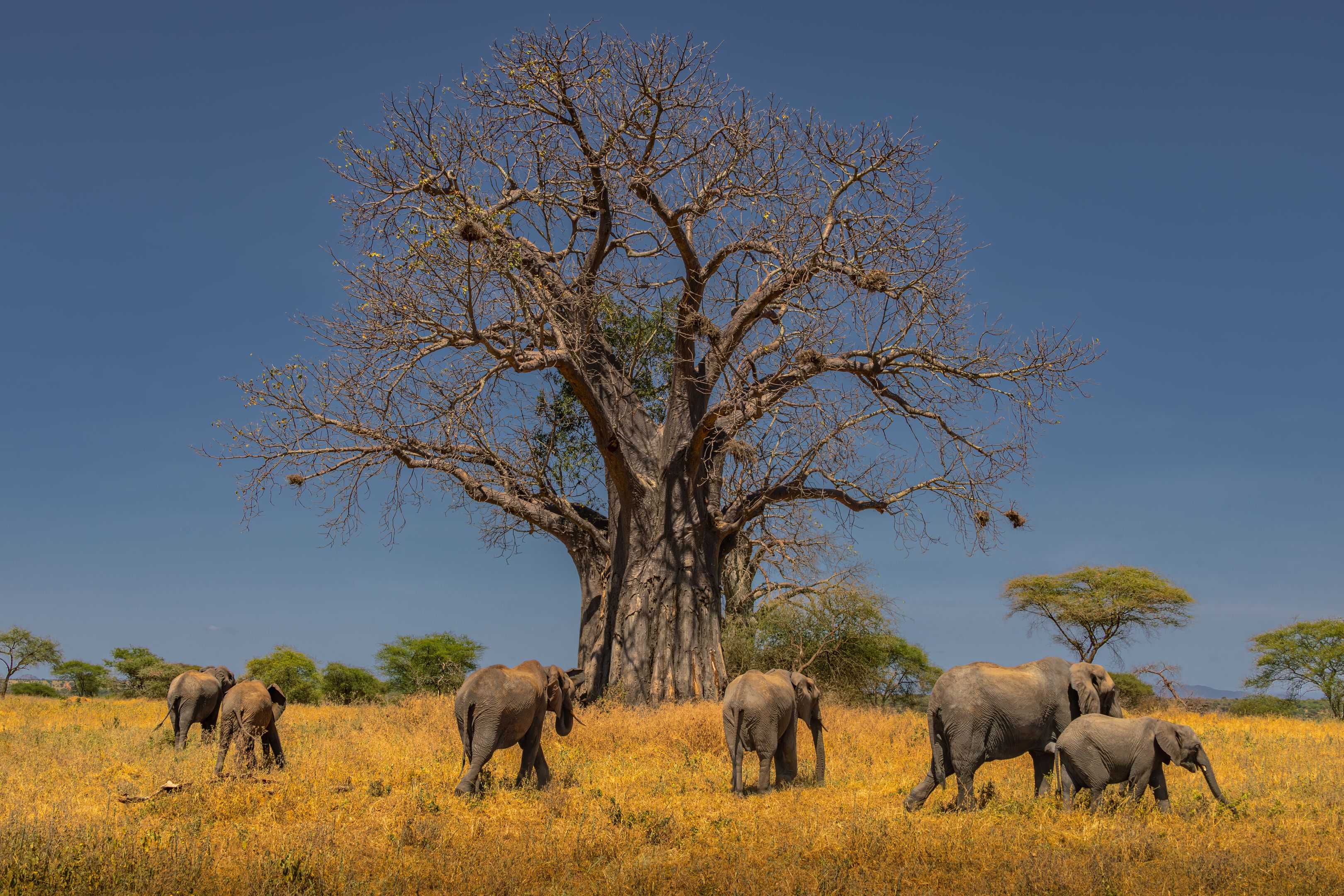
The landscape is unlike any other park on the Northern Circuit. Where the Serengeti is open plains and the Ngorongoro is geological theatre, Tarangire is the country of granite ridges, river valleys, and giant baobab trees that dominate the skyline like the architecture of an older civilisation. The baobabs are part of why travellers remember Tarangire even when they cannot remember the names of the other parks. They photograph differently. They feel older.
Why the Elephants
The simple answer: water. Tarangire is one of the last reliable water sources for hundreds of kilometres during the long dry season. From June through November, when the surrounding ecosystems desiccate and the grasslands turn brittle, elephants from far beyond the park's official boundaries migrate in, drawn by the Tarangire River and the permanent Silale Swamp.
The longer answer involves a quirk of regional ecology. The Tarangire ecosystem — when defined to include the surrounding Manyara Ranch and the Maasai Steppe — represents one of the largest unfenced, unbroken wildlife corridors in northern Tanzania. Elephant herds moving through this corridor function as a single super-population that contracts and expands seasonally. By August, the population inside the park itself can exceed 5,000 individuals. By April, after the long rains, the herds disperse outward and the in-park population drops to fewer than a thousand.
The herds themselves are unusually large. Where most African parks hold matriarchal family units of 10 to 20 elephants, Tarangire's dry-season herds frequently aggregate into super-herds of 200 to 600 — the largest gatherings of elephants on the continent outside Botswana's Chobe River. We have seen 300-strong herds drinking at the Tarangire River simultaneously. It is not a sight that the photograph carries.
The Annual Migration Cycle
Tarangire's seasonal migration is among the least-known major wildlife events in East Africa. It is rarely marketed because it cannot be promised on a date — but it is real, and understanding it makes the difference between visiting in October and seeing 600-elephant herds, or visiting in April and finding the park unusually quiet.
The simplified annual cycle:
- April – May (long rains): water becomes available across the wider ecosystem. Elephants and grazing herds move out of Tarangire toward Lake Manyara, the Maasai Steppe, and the open plains north of the park. In-park wildlife density drops sharply.
- June – early July: the rains end. Surface water in the surrounding ecosystem evaporates. The first herds begin returning to the Tarangire River.
- August – September: peak dry season. Park-wide concentration is among the highest densities of mammals anywhere in Tanzania.
- First two weeks of October: the absolute peak — water levels at their lowest, herds at their largest, wildlife forced into the smallest area around the river. Considered by many guides the single best wildlife window on the Northern Circuit.
- November – early December: short rains begin. Herds start to disperse outward again.

For a deeper month-by-month framework across all of Tanzania, see our guide to the best time to visit Tanzania.
The Wildlife Beyond Elephants
Most travellers come for the elephants and stay for what surprises them. Tarangire holds a quietly remarkable cast of wildlife that does not appear on the marketing pages.
The Big Five — almost. Lion, leopard, elephant, and Cape buffalo are all present in healthy numbers. Black rhino is technically resident but vanishingly rare; for reliable rhino sightings, travellers should plan a Ngorongoro Crater day. Cheetah are here but harder to find than in the Serengeti — the longer Tarangire grass is not their preferred hunting cover.
The unusual antelopes. Tarangire is one of the few Tanzanian parks where you can see four rare or near-endemic species in a single morning: the gerenuk (long-necked, browses standing on hind legs), the beisa oryx, the lesser kudu, and the greater kudu. None of these appear in the Serengeti.
Predators of consequence. Lion prides hunt the dry-season concentrations along the river; leopard density along the Tarangire River is among the highest in the country; spotted hyena clans are large and active; African wild dogs make occasional appearances, particularly in the southern reaches around Silale.

The strange and the specific. Tarangire's rock pythons climb trees during the heat of the day to escape the ground temperature — a behaviour rarely seen elsewhere. Tarangire's birdlife includes the yellow-collared lovebird (a near-endemic), the ashy starling, the northern pied babbler, and the Kori bustard, the world's heaviest flying bird. The 550-plus bird species recorded here genuinely exceeds the Serengeti's count.
The Iconic Baobabs
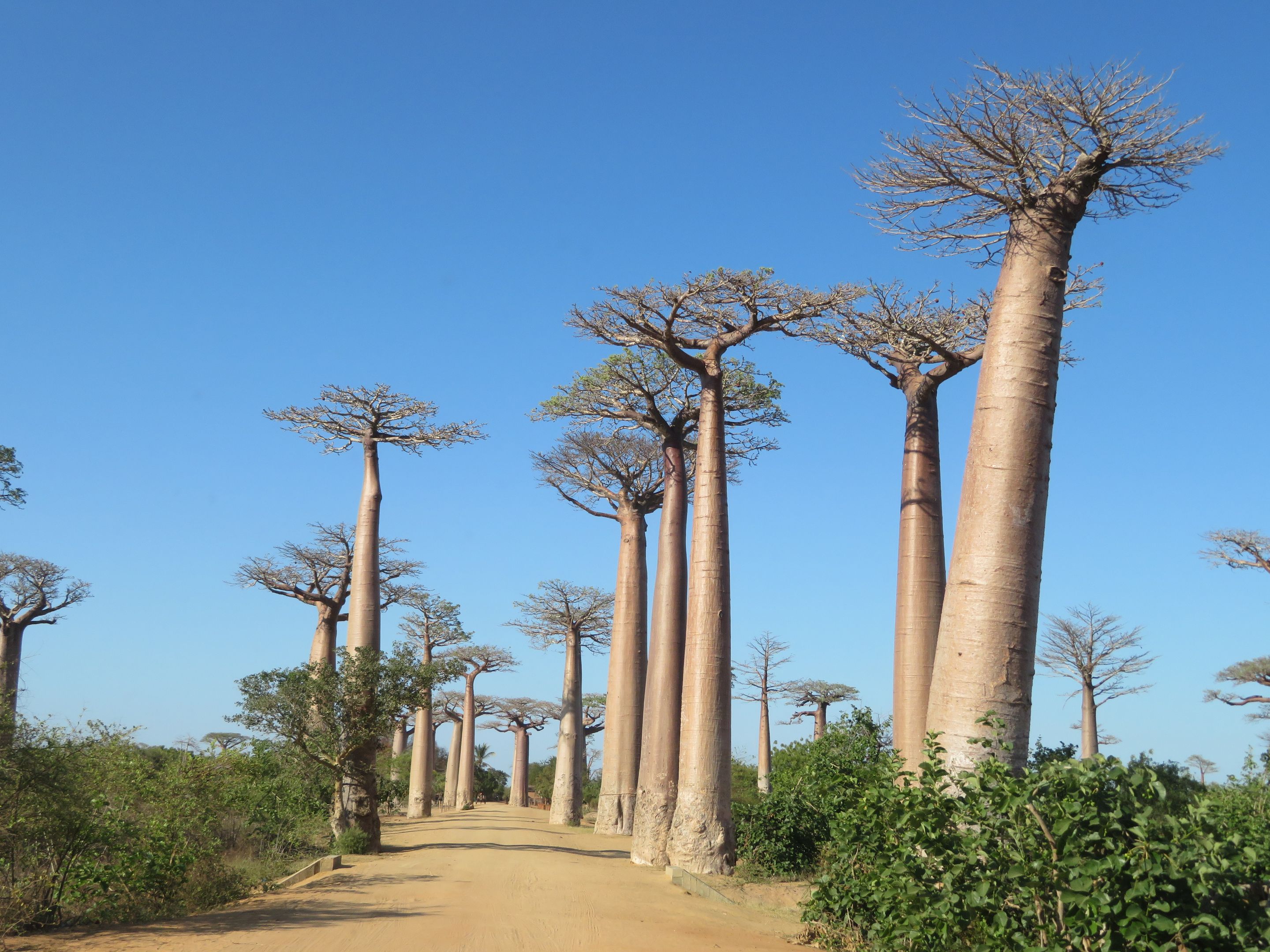
The baobab is the visual signature of Tarangire — a tree so unusual it looks, in the words of the local saying, as if it was planted upside down. The trunks are massive, hollow, and survive what would kill any other tree: drought, fire, even the persistent stripping by elephants who chew the fibrous bark for moisture during dry years.
Some of Tarangire's largest baobabs are estimated at over 1,000 years old; a few of the giants in the southern reaches of the park are believed to be approximately 2,000 years old — making them among the oldest living organisms in Africa. The trees become emergency water reservoirs in extreme drought, with elephants gouging into the soft trunks to access the water stored inside. The same trees flower at night to attract bats, produce the sour-sweet "monkey bread" fruit (rich in vitamin C), and host bird and bushbaby colonies in their hollow interiors.
Photographers consistently rate Tarangire's baobabs as the most rewarding tree photography on the entire Northern Circuit. The combination of late-afternoon sidelight, an elephant herd, and a 500-year-old baobab is the photograph that defines a Tarangire visit for most clients.
The Best Time to Visit Tarangire
Tarangire's seasonal asymmetry is sharper than any other Northern Circuit park. The single most important planning decision is when to come.
- July – October (peak dry season): the strongest window. Herds at maximum concentration, river water at its lowest, photographic conditions exceptional. Daytime ~25°C, nights ~14°C. Pricing at peak.
- First two weeks of October: the connoisseur's window inside the connoisseur's window — peak concentration with the year's last fully dry conditions before the short rains.
- November – mid-December (short rains): herds beginning to disperse, brief afternoon showers, rates falling. A reasonable shoulder window for travellers prioritising value.
- January – March (short dry season): calving season for many species, lush green, predator action remains good but elephant numbers significantly lower than dry season.
- April – mid-May (long rains): avoid for elephants. Park accessible but herds are mostly outside the boundaries. Excellent birding.
What to Do in Tarangire
The park supports activities that some Northern Circuit parks don't allow at all — making Tarangire a useful place to layer in experiences you cannot get inside the Serengeti or Ngorongoro.
Game Drives
The default activity. The southern reaches around Silale Swamp produce the densest dry-season concentrations; the northern Tarangire River area is more accessible from the gate and where most day-visitors concentrate. We typically structure two-night Tarangire stays as one full day in the north, one full day pushing south to Silale.
Walking Safaris
Permitted in Tarangire — and one of the few Northern Circuit parks where they are. On-foot guided walks with an armed ranger, focused on tracks, plants, dung, insects, and the smaller details of the bush that vehicles do not slow down for. Two to three hours, typically early morning. The change in pace and perspective from a vehicle is significant.
Night Drives
Permitted in private concession areas adjacent to the park (not inside the park itself). The reward is genets, civets, aardvark, leopard activity, and bushbabies — species effectively invisible during the day. Operated by a handful of properties, primarily Oliver's Camp and Chem Chem Lodge.
Hot-Air Balloon Safaris
An hour over Tarangire at sunrise, drifting low enough to see the patterns of elephant herds against the baobab landscape from above. Typically USD $599 per person, including champagne breakfast. Available from a small number of operators; books out months ahead in peak season.
Tarangire vs Ngorongoro vs Serengeti
The three Northern Circuit parks are routinely compared. They are different rather than competitive — and the right itinerary almost always includes all three.
- Tarangire for: largest elephant concentrations, baobab country, walking safaris, birding, fewer crowds, lower vehicle density.
- Ngorongoro Crater for: black rhino, Big Five in a single morning, dramatic geological setting, predator density.
- Serengeti for: the Great Migration, vast scale, the highest predator concentration, multi-region depth.
For deeper notes on each, see our complete guides to the Ngorongoro Crater and the Serengeti.
How Long to Stay
One to two nights is the standard recommendation for most clients. A single full day on a game drive is enough to see the dry-season herds and the southern baobab country; two nights opens up Silale Swamp, allows for a walking safari or night drive, and gives time for a balloon flight. Three or more nights makes sense for serious birders, dedicated photographers, or green-season visitors who need extra time to find dispersed wildlife.
Most of our Northern Circuit itineraries pair two nights in Tarangire as the soft-opening chapter, then move to Ngorongoro and the Serengeti for the structural anchors of the trip.
Combining Tarangire with the Northern Circuit
Tarangire is almost always the first or last park on a Northern Circuit safari, simply because of its proximity to Arusha. Our standard structure for first-time clients:
- Days 1–2: Tarangire — elephants and baobabs as the soft opening.
- Days 3–4: Ngorongoro Crater — two nights on the rim, two descents.
- Days 5–8: Serengeti — central plus the migration zone of the moment.
- Days 9–12: Zanzibar — north or east coast for a beach decompression.
The flow matters: easing into the safari at Tarangire, where the wildlife rewards slow looking, builds the patience that the Serengeti's scale rewards later. Reverse the order and Tarangire's quieter rhythm can feel anticlimactic. For the broader trip planning framework, see our guide to the best time to visit Tanzania and our Zanzibar beach holiday guide.
The Bottom Line
Tarangire rewards travellers who arrive in the right season and resist the temptation to treat it as a stopover. Two nights, planned around the dry-season herds, in baobab country, with a walking safari layered in — this is the version of Tarangire that clients still talk about a year later. Pick October if you can. Pick the soft-opening slot in your itinerary. And bring a longer lens than you think you need; the herds are larger than the photograph anticipates.