
Mount Kilimanjaro is Africa's highest peak at 5,895 metres — the world's largest free-standing mountain and one of the Seven Summits. No technical climbing skill is required. The right approach is an 8-day Lemosho or Northern Circuit route, with a reputable operator, in the dry season (January–March or June–October). Budget USD $2,500–$5,000 per person and book at least four months ahead.
Kilimanjaro is the rare mountain that almost anyone can climb and almost anyone can fail on. There is no rope work. No ice axe. No glacier travel. The summit at 5,895 metres is reached on foot, along a walking trail, by climbers who have never set crampon to ice in their lives. And yet — depending on the route they choose and the days they allow — between 30 and 70 percent of those climbers turn around before they get there.
The difference is almost never fitness. It is almost always altitude, pacing, and the route booked twelve months too late on a five-day budget that promised more than the mountain delivers. Kilimanjaro is not difficult in the technical sense. It is uncompromising in the physiological one.
This guide is the framework our concierge team uses to plan Kilimanjaro climbs for clients across the United States, the United Kingdom, Germany, France, and Australia — alongside the Tanzania safaris we layer them with. It covers what the mountain actually is, the seven routes and which to choose, the real challenge of altitude, what summit night is like, what it costs, how to pick an operator who treats their porters properly, and how to maximise the chance of standing on Uhuru Peak at sunrise.
What Kilimanjaro Actually Is
Mount Kilimanjaro stands alone in northern Tanzania, near the Kenyan border, rising 4,900 metres above the surrounding plains in a single uninterrupted slope. It is not part of a range. It is not buttressed by foothills. It is one of the largest free-standing mountains on Earth, and the highest point on the African continent.
- Summit: Uhuru Peak, 5,895 metres (19,341 feet).
- Status: dormant volcano, last major eruption approximately 360,000 years ago. Last activity around 200,000 years ago. Geologists classify it as dormant rather than extinct.
- Three volcanic cones: Kibo (the summit), Mawenzi (the dramatic rocky peak visible on the eastern flank), and Shira (collapsed plateau on the west).
- One of the Seven Summits: the highest peak on each continent.
- First climbed: 1889, by German geographer Hans Meyer and Austrian mountaineer Ludwig Purtscheller. The first known summit attempt was nearly 40 years earlier.
- Annual climbers: approximately 50,000.
What surprises most climbers is the climate. Kilimanjaro passes through five distinct ecological zones in seven days — cultivated farmland at the base, then rainforest, then heather and moorland, then high-altitude desert, and finally arctic at the summit. The temperature swing across these zones is around 50°C. You begin in shorts. You finish in seven layers, in the dark, in wind that drives the windchill below minus 20°C.

Can a Beginner Climb Kilimanjaro?
The honest answer: yes, the majority of climbers who summit are first-timers with no serious mountaineering background. Kilimanjaro is uniquely accessible among the world's high peaks because no technical skill is required. Every route is a walking route. Children over 10 stand on the summit every season; so do climbers in their 60s and 70s. Paraplegic climbers, blind climbers, and amputees have all reached Uhuru Peak.
What is required is sustained walking ability — five to seven hours a day for six to nine consecutive days, with the summit day itself involving roughly 16 hours of walking on the hardest day of the climb. A climber who can comfortably hike 15 kilometres on consecutive weekends, carrying a daypack, has the physical baseline. Specialist mountain training is not the limiting factor.
What is not required: oxygen, ice axes, crampons, technical climbing experience, or — usefully — any prior altitude exposure. The mountain itself does the acclimatising work, provided you give it enough days to do so.
The Real Enemy: Altitude, Not Difficulty
Around 90 percent of failed Kilimanjaro attempts end because of altitude sickness. The remaining 10 percent split between injury, illness, and the choice to turn around because something has stopped feeling enjoyable. Pure fitness failures are rare.
Altitude sickness — acute mountain sickness, AMS — begins to be felt above 3,000 metres in many climbers, regardless of fitness. Symptoms range from mild headache and nausea (common, manageable, often resolved by rest and hydration) to severe forms — High Altitude Pulmonary Edema (HAPE) and High Altitude Cerebral Edema (HACE) — that demand immediate descent and can be fatal if ignored. Reputable operators monitor oxygen saturation twice daily on the mountain and carry portable oxygen and a hyperbaric chamber on longer routes.
The single most effective defence against altitude is days. The body adapts to altitude through a process called acclimatisation — increasing red blood cell production, deepening breathing patterns, adjusting blood chemistry — and that process takes time. A climber spending eight nights on the mountain will produce dramatically different physiology to a climber spending five nights on the same mountain. The summit success rates reflect this:
- 5-day routes: below 50 percent. Considered too short and statistically risky. We do not book clients on these.
- 6-day routes (Machame, Marangu): 60 to 70 percent.
- 7-day routes: 75 to 85 percent.
- 8-day Lemosho or Northern Circuit: 90 to 95 percent.
- 9-day Northern Circuit: over 95 percent.
The math is unsentimental. An extra day or two on the mountain costs $300 to $600 per climber. It typically doubles the chance of standing on the summit. We always recommend the longer route.
The Seven Routes Compared
There are seven official routes to the summit, each with a different character, success rate, and crowd density. Choosing between them is the single most consequential decision a climber will make.
Lemosho
Our default recommendation for first-time climbers. Approaches from the west, with two days through dramatic Shira Plateau scenery before joining the southern circuit. Excellent acclimatisation profile, low crowds in the early days, summit success around 90 percent on the 8-day version.
Northern Circuit
The longest route on the mountain — and the one with the highest success rate. Circles the entire northern slopes, giving the body the most time to acclimatise. The quietest route by a meaningful margin. The connoisseur's choice for travellers who can absorb the cost and the time.
Machame
The most popular route — around 35 percent of all climbers — and busy at every camp. Beautiful southern approach with strong acclimatisation. We recommend Machame at 7 days, not 6. Avoid the 6-day version.
Marangu
The "Coca-Cola route" — the only route with sleeping huts rather than tents. Same trail up and down, lower acclimatisation, the lowest summit success rate of the popular routes. We do not generally recommend Marangu unless tents are impossible for the climber.
Rongai
The only route that approaches from the north. Drier than the southern routes — a strong choice during shoulder-season months when other routes are rain-affected. Quieter than Machame. Slightly less scenic; views open up after summit.
Shira
Begins by driving up to 3,500 metres rather than walking — a fast start that compromises acclimatisation. Now mainly used as an emergency vehicle road. We do not book clients on Shira.
Umbwe
The shortest, steepest, and most direct route. Spectacular but demanding, with poor acclimatisation built in. Suitable only for fit, experienced climbers comfortable with high-altitude exposure on tight schedules. The least-used route by some margin.
Our default recommendation: 8-day Lemosho for almost every first-time climber. 9-day Northern Circuit if budget and time allow. 7-day Machame as the budget-conscious alternative.
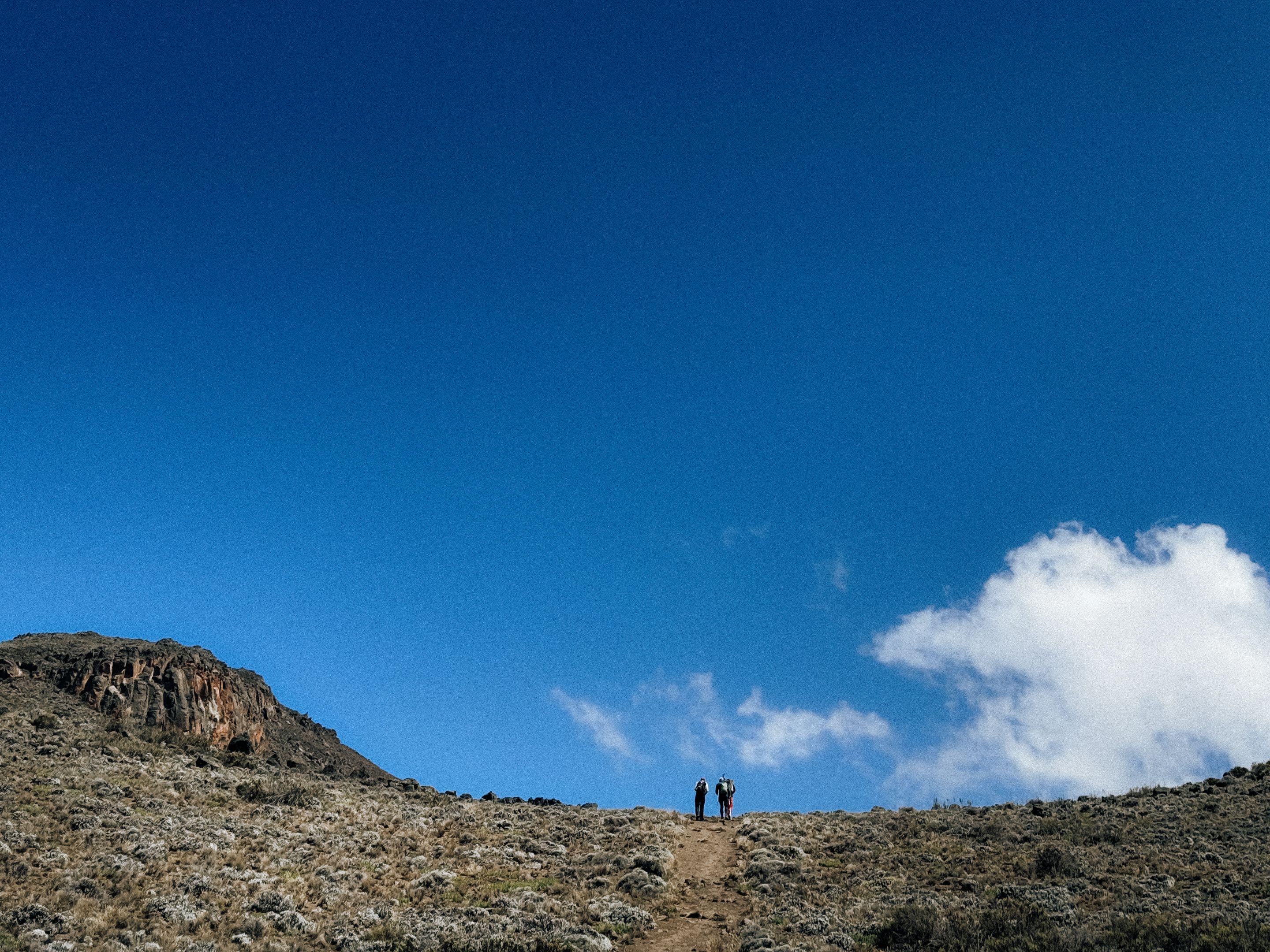
Summit Night: What It's Actually Like
Summit night is the part of the climb most films and brochures get wrong. Here is the actual sequence.
You arrive at high camp — Barafu, Kibo Hut, or Kosovo Camp depending on route — in the early afternoon of the day before summit. Camp sits at approximately 4,600 to 4,800 metres. You eat an early dinner, attempt to sleep, and rarely succeed. The reduced oxygen at altitude makes restful sleep nearly impossible; vivid dreams, restlessness, and a sense of being slightly outside your own body are normal.
You wake at around 11pm. You eat a small meal you do not particularly want. You dress in seven layers, leave the tent at midnight, and begin walking uphill in the dark behind a head torch. The temperature is around minus 10 to minus 20°C with windchill. You walk for six to seven hours. Most climbers reach Stella Point — the crater rim at 5,756 metres — at sunrise. From there, it is another 45 minutes around the rim to Uhuru Peak.
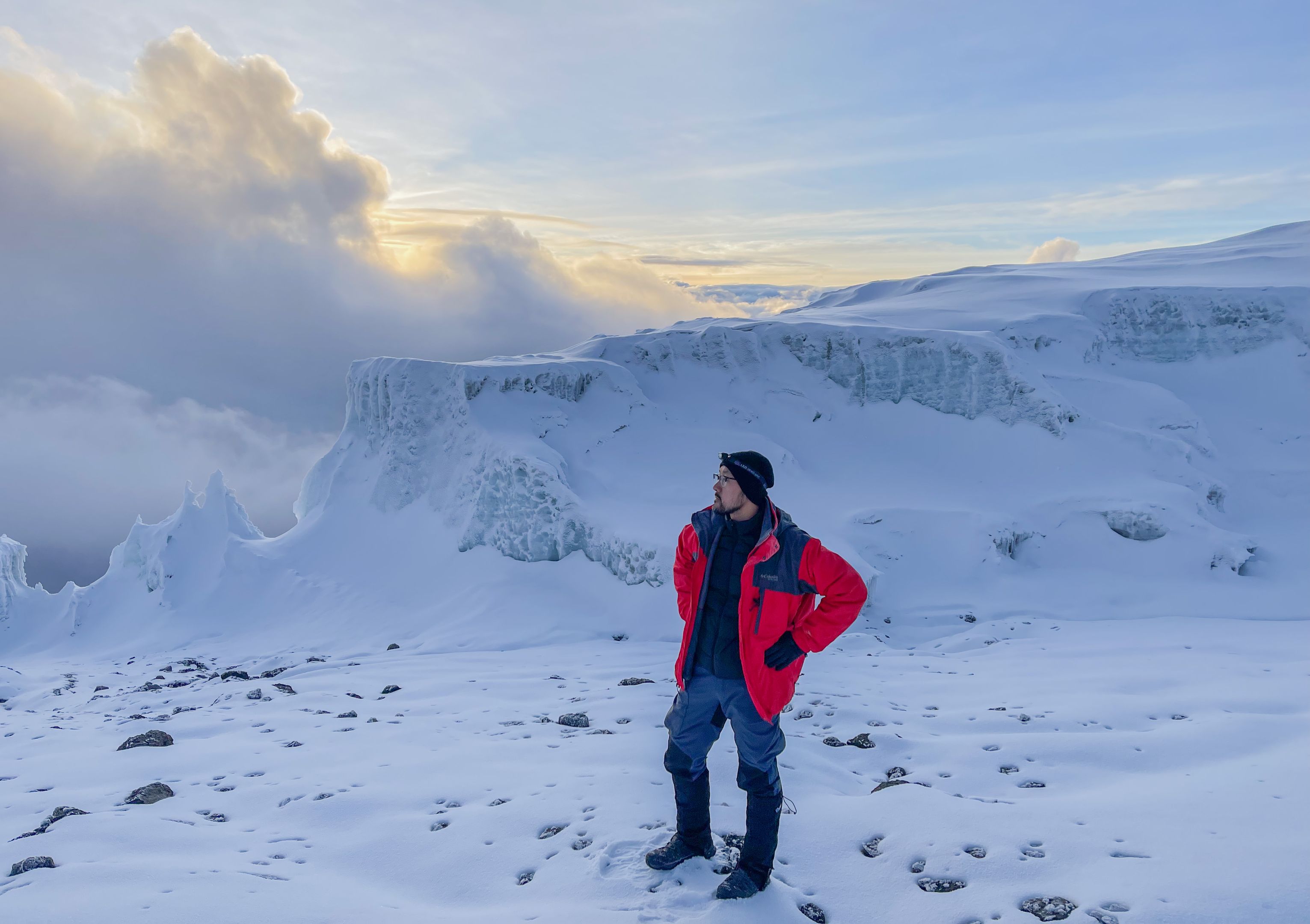
Then you turn around and walk down. The descent on summit day is itself nearly six hours, returning to high camp for a brief rest and continuing down to a lower camp the same afternoon. Total time on your feet for summit day: approximately 16 hours. It is the single hardest day on the mountain, and it is harder than most climbers anticipate.
Things our clients consistently say afterwards they wish they had known:
- Hydration packs freeze solid above 5,000 metres. Carry water in a 1-litre Nalgene inside a thermal sock, stored upside down (water freezes from the top).
- Apply SPF lip balm constantly. The combination of wind, cold, and altitude UV destroys lips faster than any other condition mountains throw at you.
- Summit night is mentally harder than physically. Every climber wants to turn around at some point. The skill is recognising the difference between AMS that should turn you back and ordinary altitude discomfort that should not.
- The summit photograph takes 30 seconds. The descent takes six hours. Save energy for the descent.
The Best Time to Climb
Two clear windows. Two windows to avoid.
- January – mid-March (short dry season): stable weather, dry trails, clear summit views. Generally less crowded than June–October. Our quiet favourite.
- June – October (long dry season): the most popular climbing window. Reliable conditions, busiest trails, peak pricing. June and October are the strongest months — drier than the shoulder edges of the window.
- April – May (long rains): avoid. Trails turn to mud, summit visibility drops, hypothermia risk rises. Some operators close.
- November – mid-December (short rains): avoid. Less severe than the long rains, but afternoon storms and wet trails compromise the experience.
March and October are the connoisseur's months — fewer climbers on every route, conditions still good, occasionally a one-day rain window that other months avoid. For a deeper month-by-month framework across all of Tanzania, see our guide to the best time to visit Tanzania.
What It Costs (and Why Cheap Climbs Are Dangerous)
Kilimanjaro pricing has a wider spread — and a more serious cost-quality relationship — than almost any other adventure travel decision. Typical ranges per climber, all-inclusive of park fees, food, guides, porters, equipment, and pre/post-mountain hotel:
- Budget operators (negotiated in Moshi): $1,000–$1,800. We strongly advise against this tier. Park fees alone exceed $1,000 per climber; an operator charging less is cutting corners on porter wages, equipment, food, or all three.
- Reputable mid-range operators: $2,500–$3,500. Our preferred range for most clients — properly paid porters, professional guides, quality tents and food, oxygen and rescue equipment carried.
- Premium and luxury operators: $4,000–$6,000+. Higher porter ratios, walk-in tents, sleeping cots, hot showers at certain camps, satellite communications. Worth the upgrade for some climbers; not the dividing line between safe and unsafe.
What is included in any reputable quote: park entry fees ($70/day), camping fees ($60/day), rescue fees, food, accommodation in tents, professional guides, porters, cook, hotel nights either side of the climb, transport to and from the trailhead, and the use of group equipment. Not included: international flights, visas, travel insurance with high-altitude evacuation cover (essential), tips for guides and porters, and personal climbing equipment.
Tipping is not optional and not a service charge. The expected tip pool — split between the head guide, assistant guides, cook, and porters — is approximately $250 to $400 per climber for an 8-day climb. The Kilimanjaro Porters Assistance Project (KPAP) is the standard for ethical operator certification; we recommend climbing only with KPAP-certified operators. The wage difference for porters between certified and uncertified operators is meaningful.
What to Pack
The packing list shifts dramatically across the climb's five climate zones. The categories that matter most:
- Layering system: base layer (merino), mid-layer (fleece), insulated jacket (down or synthetic to minus 15°C rating), waterproof shell. You will wear all four on summit night.
- Footwear: waterproof hiking boots, fully broken in. Brand new boots produce 100 percent of the blisters we see.
- Sleeping system: sleeping bag rated to minus 12°C or below. Most reputable operators rent quality bags.
- Water: 3-litre capacity minimum, ideally one Nalgene for summit night plus a hydration pack for daytime walking.
- Sun and wind: SPF 50 sunscreen, SPF lip balm (apply hourly), polarised sunglasses, buff, balaclava, two pairs of gloves (mid-weight and heavy summit-night gloves).
- Headlamp: with fresh batteries plus spares. The summit night ascent depends entirely on this.

Reputable operators provide a detailed kit list with each booking, and the better ones offer a pre-climb gear inspection in Moshi to catch any gaps before the trailhead.
Combining Kilimanjaro with a Safari
Many of our clients fly all the way to East Africa to climb Kilimanjaro and do not extend the trip. We almost always recommend they do. After eight days on the mountain — physically demanding, emotionally intense, often transformative — the contrast of three to four days in a tented camp on the Serengeti or two nights on the rim of the Ngorongoro Crater is exactly the right closing chapter.
Logistics are simple. The mountain finishes near Moshi or Arusha — both within an hour's drive of Kilimanjaro International Airport, which is also the gateway to the Northern Circuit safari. A typical 12 to 14-day combined itinerary works as: 8-day climb → 1 night recovery in Arusha → 4-night safari → fly out, sometimes via Zanzibar for a final beach decompression. For the safari side, see our complete guides to the Serengeti, the Ngorongoro Crater, and a Zanzibar beach holiday.
The Bottom Line
Kilimanjaro rewards the climber who takes more days than they think they need, picks an operator who treats their porters properly, and accepts that summit night is supposed to be hard. The mountain does not punish first-timers. It punishes shortcuts.
Pick the 8-day Lemosho. Train for the sustained walking, not the altitude. Pack for cold rather than for distance. Tip generously. And remember the quiet truth that experienced guides repeat to every group at high camp: success is not standing on the summit. Success is coming home healthy. The summit is one of the views along the way.